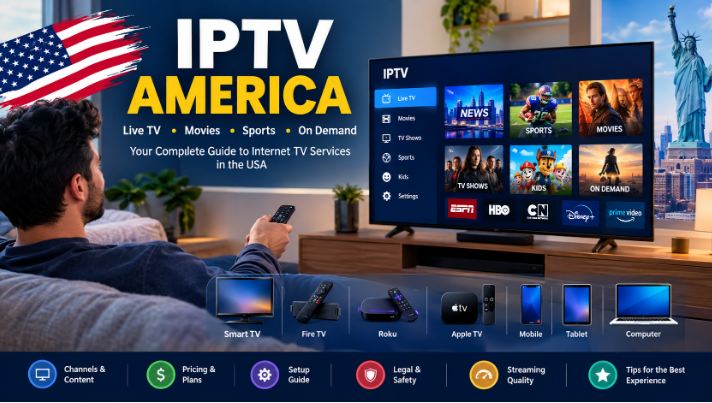
Watching television has changed dramatically over the last few years. Traditional cable and satellite television are no longer the only ways to watch live channels, sports, movies, news and entertainment. With a reliable internet connection, viewers can now stream television content through internet-based services from almost anywhere.
This technology is commonly known as IPTV, or Internet Protocol Television. In America, IPTV has become increasingly popular because it gives viewers more flexibility than traditional television packages. Instead of depending entirely on a cable box or satellite dish, users can watch content through compatible smart TVs, streaming devices, computers, tablets, and smartphones.
However, the IPTV market can be confusing. There are many services available, and not every IPTV provider operates legally or offers the same level of quality. Understanding how IPTV works, what features to look for, how much it can cost and how to identify legitimate services can help consumers make better decisions.
This complete guide explains IPTV America, including how IPTV works, its benefits, available device options, important features, pricing considerations, setup instructions, security concerns, and tips for choosing a reliable service.
What Is IPTV America?
IPTV America generally refers to television and video streaming services delivered to viewers in the United States through an internet connection.
The term IPTV stands for Internet Protocol Television. Unlike traditional television broadcasting, IPTV uses internet protocols to deliver video content to a compatible device.
With IPTV, television programming can include:
- Live TV channels
- News broadcasts
- Sports programming
- Movies
- TV shows
- Documentaries
- On-demand content
- Local programming
- International channels
- Catch-up television
- Recorded programs
The exact content depends on the service and its licensing agreements.
It is important to understand that IPTV itself is simply a technology for delivering television over the internet. IPTV is not automatically legal or illegal. The legality depends on whether the provider has the necessary rights and licenses to distribute the content it offers.
How Does IPTV Work?
Traditional television systems transmit programming through cable networks, satellite signals, or terrestrial broadcasts. IPTV takes a different approach by sending video data through an internet connection.
When a viewer selects a channel or program, the IPTV service sends the requested video data to the user’s device. The device then processes the stream and displays the content on the screen.
A simplified IPTV process looks like this:
Content provider → IPTV platform → Internet connection → Streaming device → Television screen
The viewer does not necessarily need a traditional cable box. Depending on the service, IPTV can work through an application, website, dedicated streaming device, or smart TV platform.
The quality of the experience depends on several factors, including internet speed, server performance, video resolution, network congestion and the device being used.
Why Is IPTV Becoming Popular in America?
American viewers have access to a huge number of television and streaming options. However, traditional cable packages can be expensive and many consumers prefer flexible services that allow them to watch content on different devices.
IPTV and internet-based television can provide several advantages.
Flexible Viewing
Users can potentially watch television at home or while traveling, provided the service permits the particular use and the viewer has a suitable internet connection.
This flexibility is particularly useful for people who use multiple devices.
Multiple Device Support
Many legitimate streaming platforms support devices such as:
- Smart TVs
- Android TV devices
- Apple TV
- Roku
- Amazon Fire TV
- Smartphones
- Tablets
- Windows computers
- Mac computers
- Web browsers
Device compatibility varies between providers, so it should always be checked before subscribing.
On-Demand Entertainment
Modern television viewers increasingly expect to choose what they want to watch instead of following a fixed broadcast schedule.
Many internet television services combine live programming with on-demand movies and television shows.
Potentially Lower Costs
Some internet television packages can cost less than traditional cable packages, particularly for viewers who only need a specific selection of channels.
However, cheaper does not always mean better. Consumers should consider channel licensing, reliability, customer support, video quality and additional fees before making a decision.
IPTV America vs. Traditional Cable TV
The main difference between IPTV and traditional cable television is the delivery method.
| Feature | IPTV | Traditional Cable |
|---|---|---|
| Delivery | Internet | Cable network |
| Internet Required | Usually yes | Usually no for traditional cable delivery |
| Device Flexibility | Often high | Often more limited |
| On-Demand Content | Common | Available depending on provider |
| Installation | Often simple | May require technician |
| Mobility | Potentially high | Primarily home-based |
| Channel Availability | Depends on service | Depends on package |
| Equipment | App or streaming device | Cable box |
Neither option is perfect for everyone.
Cable television can be attractive for households that want a conventional television package and reliable delivery without depending entirely on home internet. IPTV and other internet television services may appeal to viewers who prioritize flexibility and multi-device access.
What Channels Can You Watch With IPTV in America?
The channels available through a legitimate IPTV or internet television service depend on its licensing agreements.
A provider may offer categories such as:
News Channels
News programming can include national, regional and international news networks.
Sports Channels
Sports are one of the major reasons people search for internet television services. Depending on licensing rights, packages may include sports networks and live sporting events.
Viewers should always verify that a provider has legitimate rights to distribute the sports content they advertise.
Entertainment Channels
Entertainment packages may include television networks featuring:
- Drama
- Comedy
- Reality shows
- Talk shows
- Lifestyle programming
- General entertainment
Movie Channels
Some services offer movie networks or on-demand movie libraries.
Kids’ Programming
Family-oriented packages may include children’s channels and educational programming.
International Channels
Some internet television platforms offer programming from countries around the world. This can be useful for viewers who want access to international news, languages and cultural content.
The important point is that channel lists vary considerably between providers. A large advertised channel count should not automatically be considered a sign of quality.
Important Features to Look for in IPTV America
If you are evaluating an IPTV service in America, consider more than the number of channels.
1. Legal Content Licensing
This should be the first consideration.
A legitimate provider should have the appropriate rights to distribute the content it offers. Be cautious about services that advertise premium channels, major sports events and huge channel lists at extremely low prices without explaining their licensing arrangements.
2. Video Quality
Modern viewers generally expect high-quality streaming.
Depending on the service and content, you may encounter:
- SD
- HD
- Full HD
- 4K
Higher resolution requires more bandwidth and compatible hardware.
A provider claiming to offer 4K everywhere does not necessarily mean every channel is actually broadcast in native 4K.
3. Reliability
A television service is not useful if streams constantly stop or disconnect.
Look for a provider with a reputation for stable streaming, reliable infrastructure, and responsive customer support.
4. Electronic Program Guide
An Electronic Program Guide (EPG) makes it easier to see what is currently playing and what is scheduled next.
A well-designed EPG can make an IPTV platform feel much more like a traditional television service.
5. Catch-Up or Replay Features
Some legitimate platforms allow users to watch recently broadcast programs after their original airing.
Availability depends on the service and the content rights.
6. Multiple Device Support
Before subscribing, determine whether the service supports your preferred device.
If you plan to watch on a smart TV, for example, check whether the provider has an official application for your TV platform.
7. Customer Support
Good customer support can make a significant difference when dealing with login problems, billing issues, application errors, or device compatibility.
Look for clear contact information and understandable support policies.
Internet Speed Requirements for IPTV
Your internet connection has a major impact on streaming quality.
As a general rule, higher video quality requires more bandwidth.
Approximate requirements can vary depending on compression and the service, but viewers commonly need:
- SD: around 3–5 Mbps
- HD: around 5–10 Mbps
- Full HD: around 8–15 Mbps
- 4K: often 20–50 Mbps or more
These numbers are only general guidelines. A household with several people streaming simultaneously may need substantially more bandwidth.
For example, if one person is watching 4K video while another is playing an online game and a third person is downloading a large file, the available bandwidth can become divided among multiple activities.
A wired Ethernet connection can also provide a more stable connection than Wi-Fi in some homes.
Devices That Can Be Used With IPTV
One of the biggest advantages of internet television is device flexibility.
Smart TVs
Many modern televisions include built-in applications and app stores. If a legitimate IPTV provider offers an official app for your television platform, installation can be relatively straightforward.
Streaming Devices
Devices such as Roku, Apple TV, Amazon Fire TV, and Android TV-based products can provide access to compatible television applications.
Smartphones and Tablets
Mobile devices can be useful for watching television while away from home, subject to the provider’s terms and geographical restrictions.
Computers
Many services can be accessed through a web browser or desktop application.
This can be convenient when you want to watch television without turning on a separate TV.
How to Set Up a Legal IPTV Service
The exact setup process varies from one provider to another, but the general process is straightforward.
Step 1: Choose a Legitimate Provider
Research the service before purchasing a subscription.
Check its official website, pricing information, supported devices, content rights, privacy policy, and customer support options.
Step 2: Select a Suitable Package
Choose a package based on the channels and features you actually need.
Avoid paying for hundreds of channels that you will never watch.
Step 3: Create an Account
Most legitimate services require an account using an email address and password.
Use a strong, unique password rather than reusing a password from another service.
Step 4: Install the Official Application
If the provider offers an official application, download it through your device’s legitimate app store whenever possible.
Avoid installing unknown applications from random websites.
Step 5: Sign In
Enter your account credentials and follow the provider’s activation instructions.
Step 6: Test the Service
Before committing to a long-term subscription, check video quality, channel availability, application performance and customer support.
If a trial is legally offered, it can be a useful way to evaluate the service.
IPTV and 4K Streaming
4K television has become increasingly common in American households.
However, owning a 4K television does not automatically mean that every IPTV stream will appear in 4K.
True 4K streaming requires:
- 4K-compatible content
- A compatible device
- Sufficient internet bandwidth
- Appropriate application support
- A television capable of displaying 4K
Some providers may advertise 4K availability while offering only selected programs in that resolution.
Therefore, always check which channels and programs actually support 4K.
IPTV America for Sports Fans
Sports streaming is an important part of the internet television market.
American viewers may be interested in services that provide access to:
- Football
- Basketball
- Baseball
- Hockey
- Soccer
- Tennis
- Golf
- College sports
However, sports broadcasting rights are complicated. A service may not legally distribute every sporting event.
Before purchasing a service specifically for sports, verify that the competitions you want to watch are officially available in your region.
A suspicious service promising every premium sports channel and every major event for an unusually low monthly price deserves careful investigation.
Is IPTV Legal in America?
This is one of the most important questions surrounding IPTV.
IPTV technology itself is legal. The issue is whether a particular provider has permission to distribute the content it offers.
Legitimate streaming and television services pay for content rights or operate under appropriate licensing agreements.
By contrast, unauthorized services may redistribute copyrighted channels, movies, sports events, or television programs without permission.
Consumers should avoid providers that appear to depend on unauthorized content distribution.
Some warning signs include:
- Extremely low prices for an enormous channel list
- Premium channels offered without clear licensing information
- Anonymous operators
- No legitimate company information
- Requests to install suspicious applications
- Payment methods designed to make refunds difficult
- No clear terms of service
- No privacy policy
- Promises of unrestricted access to virtually every premium network
When choosing IPTV America, legal content and consumer safety should come before channel quantity.
IPTV Security and Privacy
Streaming services require users to think about cybersecurity as well.
Unknown IPTV applications can create unnecessary security risks, particularly when users download APK files or applications from unofficial sources.
Potential risks include:
- Malware
- Account theft
- Tracking
- Unwanted advertisements
- Credential theft
- Device compromise
- Exposure of personal information
For better security, download applications from official app stores whenever possible.
Keep your streaming device updated and use strong passwords for your accounts.
You should also avoid entering payment information into websites that do not appear trustworthy.
Does IPTV Need a VPN?
A VPN, or Virtual Private Network, encrypts internet traffic between your device and the VPN provider and can improve privacy in some situations.
However, a VPN does not make unauthorized streaming legal.
If an IPTV service does not have the right to distribute copyrighted content, using a VPN does not change that underlying issue.
For legitimate services, users should follow the provider’s terms and geographical restrictions.
A VPN can have legitimate privacy and security uses, but it should not be viewed as a method for bypassing copyright restrictions.
IPTV Buffering: Common Causes and Solutions
Buffering is one of the most frustrating streaming problems.
Several factors can cause it.
Slow Internet
If your connection does not provide enough bandwidth, the video may repeatedly pause.
Weak Wi-Fi
A router located far away from the television can produce an unstable connection.
Try moving the router closer or using Ethernet where practical.
Network Congestion
Internet performance may decrease during periods of heavy household or local network usage.
Device Problems
Older devices may struggle with high-resolution streams.
Provider-Side Problems
Sometimes buffering is caused by the streaming provider rather than the viewer’s internet connection.
If multiple channels buffer while other internet services work normally, the provider may be experiencing an issue.
How Much Does IPTV America Cost?
Pricing varies significantly.
A legitimate internet television service may charge a monthly subscription, annual plan or package-based fee.
The cost depends on:
- Number of channels
- Sports availability
- On-demand library
- Video resolution
- Number of simultaneous streams
- Cloud DVR features
- Premium networks
- Device support
Consumers should compare the total cost, not just the advertised monthly price.
For example, a service may appear inexpensive initially but require additional fees for premium channels or extra devices.
How to Choose the Best IPTV America Service
There is no single IPTV service that is perfect for everyone.
Instead, consider your own viewing requirements.
Consider Your Favorite Channels
Make a list of the channels you actually watch.
Then compare that list with the provider’s official channel lineup.
Check Device Compatibility
Make sure the service works on your preferred television, streaming device, smartphone, or computer.
Evaluate Video Quality
If you have a 4K television, investigate whether the provider genuinely offers 4K content.
Read the Terms
Review cancellation rules, refunds, simultaneous-stream policies and geographical restrictions before paying.
Check Customer Support
A legitimate business should provide a reasonable method of contacting support.
Avoid Unrealistic Promises
A massive channel list at an unbelievably low price can be a warning sign.
Quality, licensing, reliability, and customer service are more important than an impressive number on a channel list.
IPTV vs. Streaming Services
IPTV and conventional streaming services can overlap significantly.
Services such as internet-based live TV platforms combine live channels with on-demand content, while other streaming platforms focus primarily on movies and TV shows.
The best choice depends on your viewing habits.
If you primarily watch live television, a live TV service may be more useful.
If you mainly watch movies and original shows on demand, an on-demand streaming platform may make more sense.
Some households combine several services to create a personalized entertainment setup.
Advantages of IPTV America
Internet television offers several potential advantages.
Convenience
Viewers can access programming through compatible internet-connected devices.
Flexibility
Many services allow viewing across different supported devices.
On-Demand Content
Users can often choose programs instead of following a fixed schedule.
Modern Features
Electronic program guides, search functions, replay options, recommendations and cloud DVR can make television more convenient.
Reduced Dependence on Traditional Hardware
Depending on the service, users may not need a conventional cable box.
Disadvantages of IPTV America
IPTV also has limitations.
Internet Dependency
If your internet connection goes down, internet-based television may become unavailable.
Variable Quality
Streaming quality depends on the network, device, and provider.
Licensing Differences
Not every provider can legally offer every channel.
Device Compatibility
A service may not support every television or streaming platform.
Subscription Complexity
Consumers may need multiple subscriptions to access all of their favorite programming.
Future of IPTV in America
The future of television is increasingly connected to internet technology.
As broadband networks become faster and streaming devices become more capable, viewers are likely to continue moving toward flexible internet-based television services.
Several trends may shape the future:
Higher Resolution
4K content is becoming more common, while advanced display technologies continue to improve.
Personalized Recommendations
Streaming platforms increasingly use viewing behavior to recommend programs.
Cloud-Based DVR
Cloud recording allows viewers to save programs without relying on traditional physical recording equipment.
Multi-Device Viewing
Consumers increasingly expect television services to work across televisions, phones, tablets and computers.
More Flexible Packages
Viewers may continue looking for packages that allow them to pay for the content they actually watch.
Final Thoughts on IPTV America
IPTV America represents the broader shift from traditional television broadcasting toward internet-based viewing. With the right service, viewers can enjoy live television, on-demand programming, sports, news, movies, and entertainment across compatible devices.
However, choosing an IPTV service should not be based solely on the number of channels advertised.
The most important factors are legality, reliability, video quality, device compatibility, security, customer support, and overall value.
Before subscribing, investigate the provider carefully. Check whether it has legitimate rights to distribute its content, read its terms and privacy policy, verify supported devices, and avoid suspicious applications or unrealistic offers.
For viewers who have a reliable internet connection and want more flexibility than traditional television can provide, legitimate IPTV and internet television services can be a convenient part of a modern home entertainment setup.
Ultimately, the best IPTV America experience comes from choosing a trustworthy service that offers the channels and features you actually need while respecting copyright, privacy and consumer protection requirements.
For more technology-related guides and helpful online resources, visit TechPaper.

Hello! I am Sardar Sharjeel Ahmed. I have been working as a content writer since 2022, creating informative, engaging, and easy-to-understand content for websites.
My academic background in Physics has developed my research, analytical, and problem-solving skills, which I use in my writing. I enjoy researching different topics and turning complex information into clear and useful content for readers.
Through my writing, I aim to share accurate, valuable and well-researched information while continuously improving my knowledge and writing skills. I have a particular interest in technology, education, science, digital trends, and general informational content.